
Start a Thomasville People Search
Choose the first record by what is known, not by which portal looks easiest. A current street address points toward the county property roll and GIS map. A full name with a likely legal event may fit the deed index or court party search. An old address is better served by a city directory, census, or map. For a death and family trail, combine the county vital index, an estate file, and the Davidson County Public Library obituary index.
Keep the date and role attached to each result. A tax roll identifies an owner, but not every resident. A deed records parties to a land instrument. A court entry describes a filed case, while a voter profile reflects election data at a given time. These sources can corroborate one another without turning any single match into proof of a person’s present location.
- Write down the full name, known date, address, relative, or organization before searching.
- Confirm whether the relevant parcel, event, or filing belongs to Davidson or Randolph County.
- Use the official name or address index, then save the case, parcel, book/page, or date reference.
- Compare at least one second record that shows the same person in the same role and period.
- Move to the correct office counter, library, or written request channel when the web trail ends.
Sort Thomasville Records by County
Thomasville sits mainly in Davidson County, yet city budget records confirm taxable property in both Davidson and Randolph counties. County records do not merge at the city line. A Thomasville mailing address alone cannot select the right register of deeds, tax office, elections board, vital-record office, or court clerk. The parcel county controls land and tax work. The event county controls a local birth or death certificate. The filing county controls a court case.
Use the county GIS when an address is the starting point. Davidson is the practical first stop for most Thomasville searches, but a Randolph-side match requires a separate search in Randolph systems. This one check prevents a false “no record” caused by asking the right question in the wrong county.
Two-county rule. Postal city, city limits, school district, and county lines are different geographies. Verify the parcel or event jurisdiction first.
Thomasville Records Offices by Role
The main Davidson records counters are in Lexington because Thomasville is not the county seat. The Judicial Branch also operates a Davidson County courthouse branch in Thomasville. City files, such as council packets, ordinances, permits, and public municipal correspondence, stay with Thomasville departments. Each office answers a different part of a name search.
Davidson Register of Deeds
110 W. Center Street
Lexington, NC 27292
336-242-2150
Davidson Clerk of Court
110 W. Center Street
Lexington, NC 27292
336-242-6701
Thomasville Court Branch
22 Randolph Street
Thomasville, NC 27360
336-474-3185
Davidson County court access
The county Register keeps land instruments and Davidson birth, death, and marriage records. The Clerk handles civil, criminal, estate, special-proceeding, and divorce files. City staff route municipal files. Randolph County counterparts take over when the parcel, event, or case belongs there. Full access and request rules are collected under Thomasville public records.
Search Thomasville Property Names
Property records support both directions of a people search. An owner name can lead to a parcel and situs address. A street address can lead back to the named tax owner. The Davidson County Property Tax Search offers separate modes for Property Owner Name, Parcel Number, Zoning Classification, Property Address, Sales Date & Price, Land Units/Type, and PIN#. Parcel Number and PIN# are distinct labels, so copy whichever value the portal displays.
The Davidson property search shown here begins with a method selector rather than one universal search box.
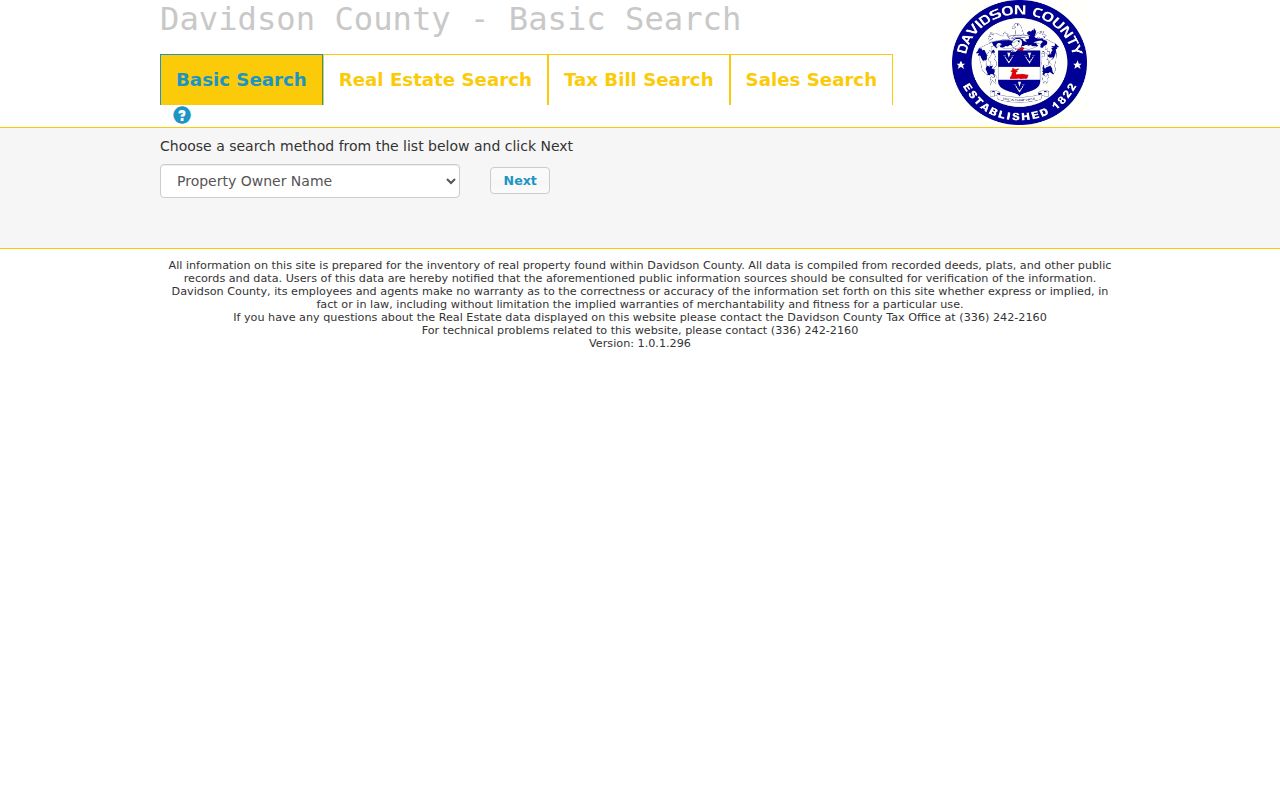
The screen helps route a known name, address, sale, or parcel key into the correct form. A result still needs context. The situs address is the mapped property, while the mailing address is where the tax notice goes. Neither field alone proves who lives on the parcel.
| Starting fact | Search mode | Next useful record |
|---|---|---|
| Person or entity | Property Owner Name | GIS and newest deed |
| Street location | Property Address | Parcel owner and mailing address |
| Known transfer | Sales Date & Price | Recorded deed parties |
| Parcel key | Parcel Number or PIN# | Map and legal description |
Trace Thomasville Deeds Since 1984
Davidson County states that its online real-estate index runs from 1984 to the present. Search names as grantor and grantee because each label reflects a role. A grantor gives or transfers an interest; a grantee receives one. The newest deed can supply recording date, document type, book/page or instrument reference, and a legal description that leads into earlier transfers.
The Davidson deed name search opens behind a public-service disclaimer.
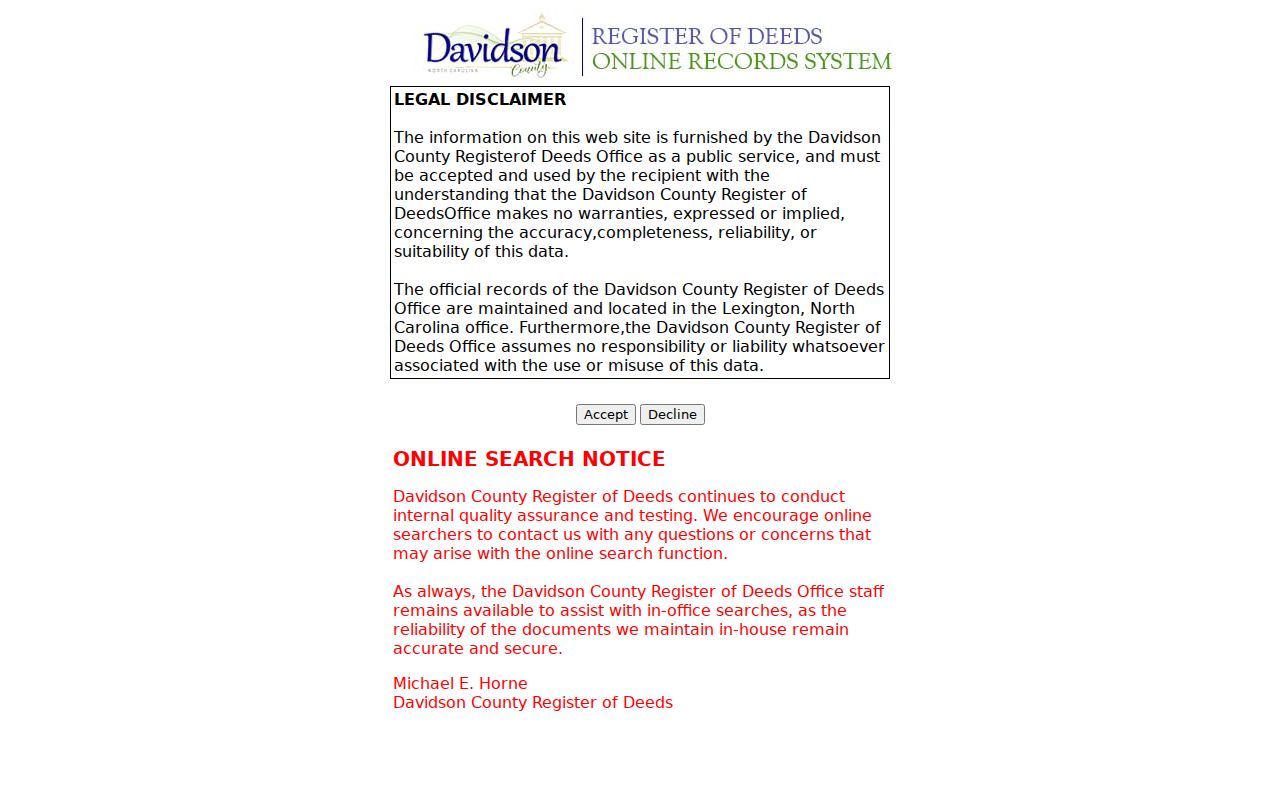
The official record remains at the Register’s Lexington office. Before 1984, use the public computer lab, self-service kiosks, staff assistance, and older indexes rather than assuming the instrument does not exist. Davidson also gives a precise title-search tip: choose document type “Release” when looking for a satisfaction.
- Index
- A finding list that points to a filed record; it may not include the full image.
- Grantor and grantee
- The parties giving and receiving the recorded interest.
- Book and page
- A durable reference used to retrieve the recorded instrument.
- Legal description
- The land description in a deed or plat, which can outlast a street-number change.
Find Thomasville Court Records
North Carolina’s General Court of Justice holds the local trial records; there is no separate Thomasville municipal court. Current public searching begins in the statewide eCourts Portal. Smart Search accepts a party name or case number and can narrow by location, case type, status, and filing dates. Court Dates is a separate tool for scheduled appearances. A docket, also called the Register of Actions, is the dated case timeline rather than the whole file.
Davidson and Randolph now use the same statewide portal, but paper custody remains county based. Select the county to reduce namesakes. A portal result may show parties, case events, hearings, dispositions, and financial information when public. Juvenile, sealed, expunged, and other confidential material stays unavailable.
| Thomasville court channel | Best use | Fallback |
|---|---|---|
| eCourts Smart Search | Party, business, case, citation, or attorney search | County Clerk terminal |
| North Carolina Court Dates | Scheduled district or superior appearance | Clerk case desk |
| Thomasville branch | Davidson court access near the city | Lexington division desk |
| PACER | Middle District federal cases | Federal clerk |
Reach Thomasville Court Files
Online summaries are only the first channel. Public self-service terminals at any North Carolina county clerk’s office can search criminal cases by defendant name, case number, or victim or witness name. Civil, estate, and special-proceeding information is also available on clerk terminals. Inspect the paper file and request copies from the clerk in the county where the case sits.
The Thomasville branch is at 22 Randolph Street. Despite that street name, it is a Davidson County courthouse branch, not a Randolph County court. Route a Randolph-filed matter to the Randolph Clerk. The Judicial Branch administrative-record form is not a shortcut for case files, vital certificates, or a compiled criminal history.
Note: A portal match is not identity proof, and a no-match is not conclusive when spelling, county, date, or access limits differ.
Access Thomasville Vital Records
Vital records follow the place of the event. The Davidson Register of Deeds is the usual local keeper for a Thomasville birth or death in Davidson and for a marriage license filed there. Randolph handles events in its part of the city. North Carolina Vital Records supplies a statewide route. Divorce judgments come from the Clerk in the county of the decree, not from the Register of Deeds.
Davidson says uncertified birth, death, and marriage records are open to inspection, subject to confidential categories. A certified copy costs $10 and requires identification plus an eligible relationship or legal-rights basis under G.S. 130A-93(c). The person named, spouse, sibling, direct ancestor or descendant, qualifying step-relative, and an authorized legal representative are among the statutory paths. Adoption and specified birth material have added limits.
The Davidson vital-record service explains inspection, ordering, eligibility, and fees.
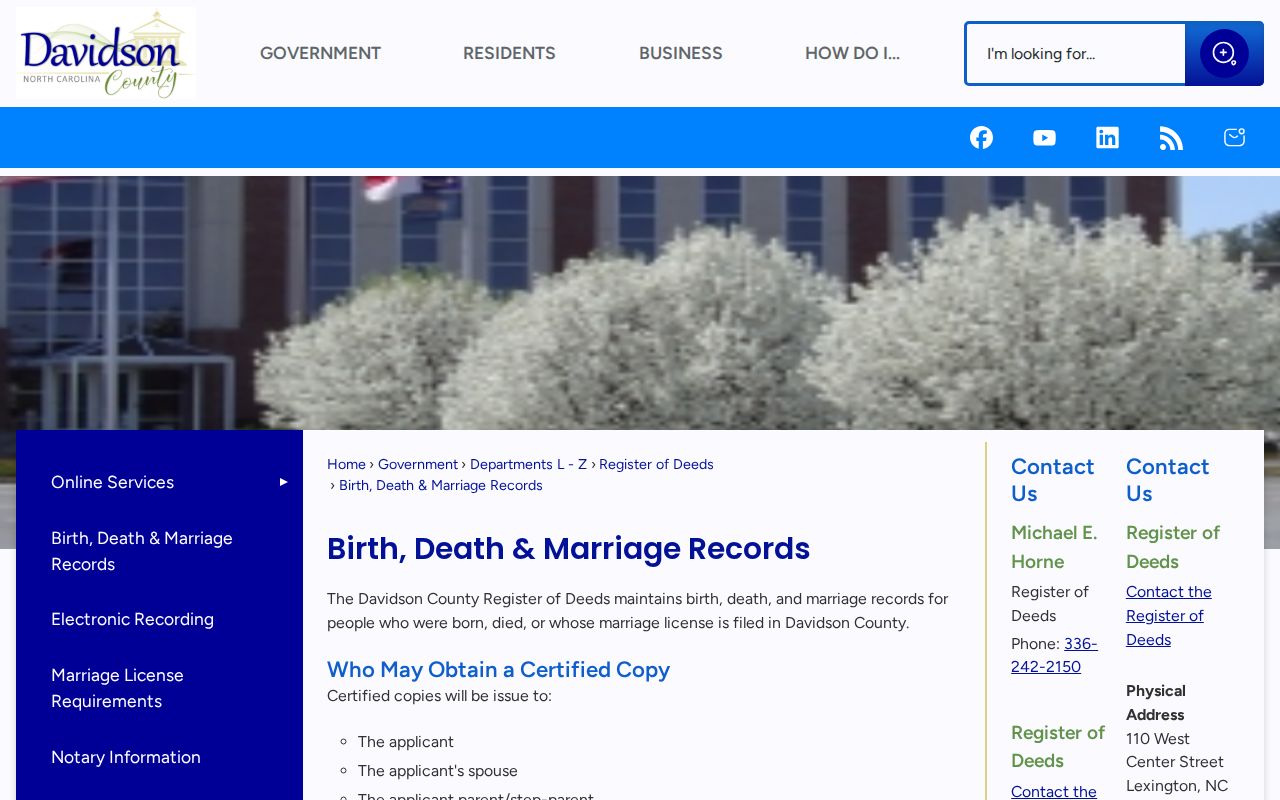
The official service page separates a public finding aid from a certificate with legal certification. Older family work can also move through county indexes, State Archives finding aids, and library collections.
Link Thomasville Estates and Obituaries
An heir trail works best when several record types agree. Start with the Clerk’s estates division for the decedent, executor, filings, and public case events. Recorded estate deeds may name an estate, personal representative, or later grantee. Death and marriage records add event facts, while an obituary may identify relatives and married surnames. No one source should be treated as a complete family tree.
Davidson County Public Library’s Dispatch obituary index and genealogy service reaches back to 1888.
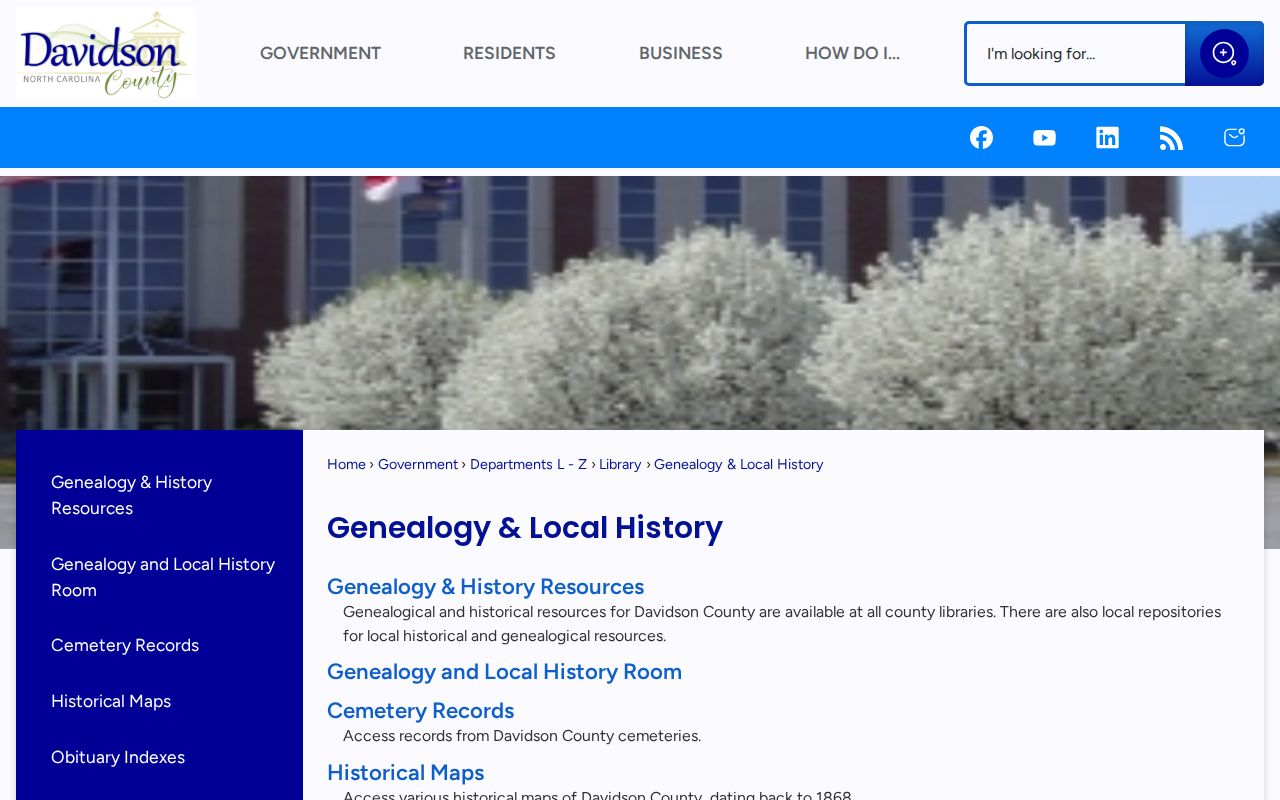
An index hit is a citation, not the full obituary. Record its newspaper date and page, then ask the Thomasville Local History room or the specialized Genealogy & History Room in Lexington for the notice or film. The Thomasville branch is at 14 Randolph Street, and the systemwide genealogy room can also help locate a title absent from the local shelf.
Browse Thomasville History Sources
DigitalNC has verified Thomasville city directories for ten date ranges from 1928-1929 through 1958-1959. The 1935 volume is especially rich. It combines an alphabetical resident list with a street guide, householders’ section, numerical telephone directory, rural-route directory, business and professional lists, churches, clubs, lodges, schools, and public officials. That structure supports both name-to-address and address-to-occupant searches.
Historical coverage has limits. The 1928-1929 directory counted “suburban territory,” so its footprint did not perfectly match city limits. A 1958-1959 phone number can identify a subscriber in that volume but may have changed soon after print. Read each abbreviation key before interpreting a spouse, widow notation, occupation, employer, or house status.
Davidson County was formed from Rowan County in 1822. Earlier Thomasville-area land and family research may therefore move into Rowan records. State Archives Davidson miscellaneous records from 1824-1946 add citizenship and naturalization material, appointments, licenses, pension records, and other named documents, though not all are digitized.
Check Thomasville Civic Records
The NCSBE Voter Search can confirm public registration facts, county, status, precinct, districts, polling place, and participation history. It never shows ballot choices. Thomasville’s county split matters again because a Davidson selection will not stand in for a Randolph registration. Full voter-record fields, protected information, list maintenance, and bulk downloads belong in the Thomasville voter registration search.
City council agendas and briefing packets create a different civic name trail. They may identify officials, staff authors, board appointees, applicants, petitioners, speakers, and property owners involved in hearings. Treat each packet as a dated municipal record. Position-classification lists can identify a likely role title or department, but they are not current staff rosters.
Verify Thomasville Business Names
The North Carolina Secretary of State Business Registration Search links a company to its SOSID, status, entity type, formation date, registered agent, offices, listed officials, annual reports, and filing images when available. Search a person under Registered Agent or Company Official as well as the company name. Name order and punctuation variants can matter.
Assumed business names filed on or after December 1, 2017 are searchable in the statewide database. Earlier filings remain a county Register of Deeds search. Professional status is board specific in North Carolina, so choose the issuing board for a lawyer, physician, nurse, contractor, real-estate licensee, or other regulated role. A company or license match verifies a recorded role and date, not a broad identity profile.
Protect People in Thomasville Searches
North Carolina makes many records open, but it also closes sensitive fields. Voter dates of birth, Social Security numbers, driver-license numbers, email addresses, voter ID images, and registration-agency identity are confidential. The Address Confidentiality Program provides a substitute-address route for qualifying relocated survivors, and a protected voter can keep the residence address from public display under the statutory process.
People may ask a Register of Deeds or Clerk to remove specified identification or account numbers from an online official-record image under G.S. 132-1.10(f). The request must identify the document, data, and exact location. It corrects the displayed image and does not erase the lawful instrument. Public information may be used only for lawful purposes, never to stalk, harass, threaten, or defeat a protection program.
Read a Thomasville No-Result
A blank result has several possible meanings. The Davidson deed may predate the 1984 web index. The parcel or event may be in Randolph County. A historical address may use an old street number. A voter may appear under a prior surname or a different status choice. A court record may be sealed, held only in a file, or indexed under a different party form.
Move deliberately through the fallbacks. Try a spelling variant and the other party role. Carry parcel, case, book/page, or date details to the office. Use the library for directories, newspaper film, maps, and yearbooks. For general Davidson executive-branch material, the county records request form is the documented written route.
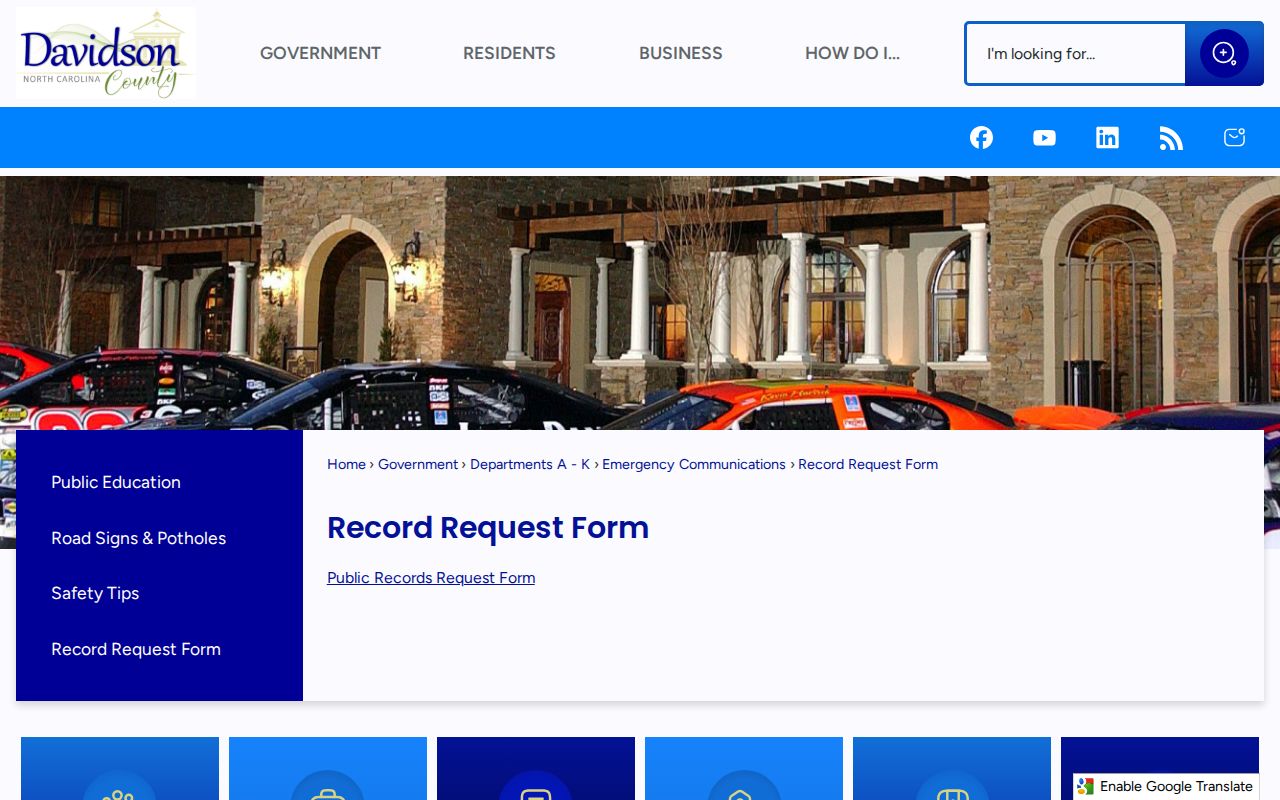
The form should name the department, record series, person or address, bounded date range, and preferred format. Court cases still go to the Clerk, while deeds and certificates go to the specialist custodian. “Not online” is a channel problem, not proof that no record exists.